Key Considerations for Building a Nonprofit Impact Measurement System
Day-to-day impact measurement can be challenging for nonprofits who wish not only to create but also demonstrate significant, positive change. A common pitfall is investing time and resources into creating complex logic models, only to find the resulting measurement system unusable in practice.
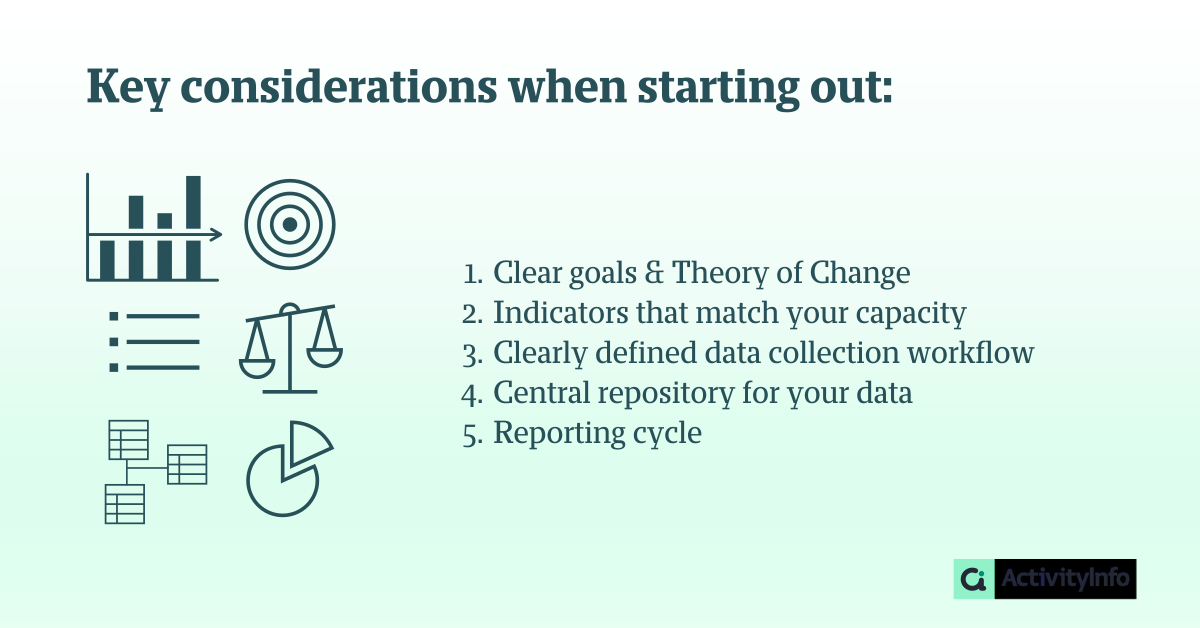
A system that "actually works" is one that starts simple but on a solid foundation, is consistent, and directly supports decision-making, tackling these challenges.
In this article, we explore some key considerations that help add structure to the approach for such a system and help make deliberate choices. Because an impact measurement system has a lot in common with a M&E system, we will be drawing from resources that have been developed for M&E/MEAL. For example, the Gap analysis tool for M&E systems developed by Education Partner Susanne Neymeyer, can be used to help detect gaps before designing an impact measurement system.
Start with clear goals and a simple theory of change
While a detailed logic model can be appealing, it can lead to a measurement system that is too burdensome to maintain. The theory of change should be a simple, living document.
Focus on defining outcomes (changes that result from your outputs) and outputs (direct results of your activities, like number of training sessions conducted, number of rights holders served) that are realistic and measurable based on your current resources.
To get started ask the question:
What are the 3-5 most critical outcomes your program is trying to achieve?
Build your entire system around those few core results.
Select indicators that match your capacity
Once the core outcomes are defined, you can select the specific indicators that will indicate progress and success. The key here is to avoid collecting more data than you actually need or can realistically manage. Here’s a list of common mistakes in indicator tracking to avoid.
In addition to being SMART, indicators should inform an action or decision (e.g., "if attendance drops below 70%, we will adjust the training schedule"), otherwise they are probably not needed.
Lastly, beware of the phrase "We just need to track one number for our LogFrame". Make sure to answer the question “Is it indeed just one number?”. Read our article “Levels of analysis in Information Management: how and how much to track” for a more detailed explanation.
Define your data collection workflow
A measurement system works because people follow a process. For this reason, you need a clear workflow that answers the questions: Who collects what, when, and how?
Consider the following actions:
- Set clear roles and responsibilities: Every indicator should have an assigned ‘data owner’ who is responsible for collecting, validating, and submitting the data on time.
- Choose collection methods based on field realities: Will staff use paper forms, a mobile app, or a simple shared document? The method must be practical for the environment where the data is being generated. For example, ActivityInfo offers an integrated mobile app that makes it possible to collect data when there is no internet connectivity. Then, when internet connectivity is restored, the data is synced, and you can view it on the platform.
- Create a cadence: Define the frequency of collection (e.g., daily attendance logs, monthly finance reports, quarterly beneficiary surveys).
Build a central repository for your data
Data scattered across different devices (PCs, mobile devices), email inboxes, and cloud folders is guaranteed to lead to inconsistent reporting. Centralizing your data is critical for validation, aggregation, and analysis.
Before even moving the data into an information system that will give life to your impact measurement system, you can get started by making some key decisions related to structure, data flow, access, and validation.
Key considerations:
- Consistency: Ensure that you have a standardized approach for the terms used in the fields of your data collection forms and that you use the correct data types when you add this to a system (e.g. date vs numeric vs text fields).
- Access and permissions: Define clear roles and permissions for everyone involved in this central repository. Not everyone should be able to access, edit, add, review or delete records.
- Validation: Mark from the beginning in which stages you need to apply basic checks to ensure data quality (e.g., ensuring numbers or dates fall within a logical range).
When the time for choosing the correct software for your impact measurement system comes, make sure that the solution you pick covers all the requirements you have and will help simplify both data collection and analysis.
Putting together various systems to create one source of truth might create additional challenges and require technical expertise. Platforms like ActivityInfo can help nonprofits structure indicators, standardize forms, and centralize data collection in one place. There is no need for consultants or developers to bring systems together as all the tools for the complete data lifecycle exist in one place. This makes it easier to maintain a consistent impact measurement system by ensuring data quality at the point of collection.
Create a reporting cycle
The real value comes from using the collected data. Establish a predictable and manageable reporting frequency to help your team move from data collection and analysis to action.
- Set a review frequency: Implement a monthly or quarterly process where program managers review key indicators and discuss deviations from targets.
- Make reporting manageable: Reports should be brief, visual, and focused on the indicators that matter most. Leadership and program expectations should be aligned.
All in all, to create a functional impact measurement system for your nonprofit organization, start simple, iterate and try to continuously improve while keeping in mind the specific requirements of your teams and program. First focus on gathering the amount of data necessary to inform your key decision and opt for a system that can be used every day instead of a sophisticated system that ends up being difficult to implement and maintain. Then, you can build on a solid foundation.
ActivityInfo can help you maintain a consistent impact measurement system that will grow with you as you scale. The platform offers a structured way to build forms, link indicators to programs, and maintain consistency without needing custom development. Curious how it could simplify impact measurement for your nonprofit? Contact us for a tailored demo.